
Several years ago, I began noticing a pattern in my classroom when we worked with nonfiction reading comprehension skills and texts.
My students were capable readers. However, when it came to informational articles, many struggled to truly understand what they were reading. They would skim the passage, hunt for answers, and jump straight to questions without really processing the text.
At first, I assumed the problem was the difficulty level of the articles. I also wondered if the challenge came from the complexity of the reading skills we were working on. But over time, I realized something important: many students had never been taught a clear process for reading nonfiction texts.
Like many teachers, I started experimenting with different strategies to help my students slow down and interact with the text more intentionally. Some strategies worked well, others did not, and many required adjustments along the way.
After a lot of trial and error, I eventually developed a structured close reading process that worked for my students. This approach helped them build stronger nonfiction reading habits by no longer jumping straight into analysis. Instead, students learned to approach informational texts in stages, beginning with a simple goal: understanding what the article was mostly about.
Once students began using this process consistently, I noticed steady improvements in their reading comprehension. Their summaries became clearer, their discussions about the text became more thoughtful, and their written responses showed stronger use of textual evidence.
Most importantly, students began approaching nonfiction texts with greater confidence because they had a clear strategy for reading and understanding them.
One of the most important parts of that process is the first read.
Students often make mistakes when reading nonfiction because they jump straight into analysis before they actually understand the text. For many middle school and high school ELA teachers, this is one of the most frustrating parts of teaching nonfiction reading comprehension. Students may be asked to identify the central idea, determine the author’s purpose, or evaluate evidence before they have even developed a basic understanding of the passage.
Strong readers approach informational texts differently. Before they begin analyzing a text, they first focus on understanding what the article is mostly about.
That is why the first read stage of close reading is so important.
When students learn to approach the first read strategically, they begin to build stronger comprehension habits that support all nonfiction reading skills, from central idea to claims and evidence.

In This Post
Why Many Students Struggle With Nonfiction Reading Comprehension
Nonfiction texts often present information in ways that differ significantly from those of narrative texts. Articles, informational passages, and historical documents frequently contain:
- unfamiliar vocabulary
- complex sentence structures
- multiple ideas within a single paragraph
- evidence and examples that support larger ideas
When students encounter this type of text, many immediately start looking for answers instead of reading to understand the material.
Over time, this creates several common habits:
- skimming instead of reading carefully
- copying sentences without understanding them
- guessing answers based on prior knowledge
- becoming overwhelmed by the amount of information in the text
Without a clear reading process, nonfiction reading comprehension quickly becomes frustrating for both students and teachers.
This is where a structured close reading routine can make a significant difference.
Why the First Read Is Essential for Nonfiction Reading Comprehension
In many classrooms, students are asked to begin analyzing a text almost immediately.
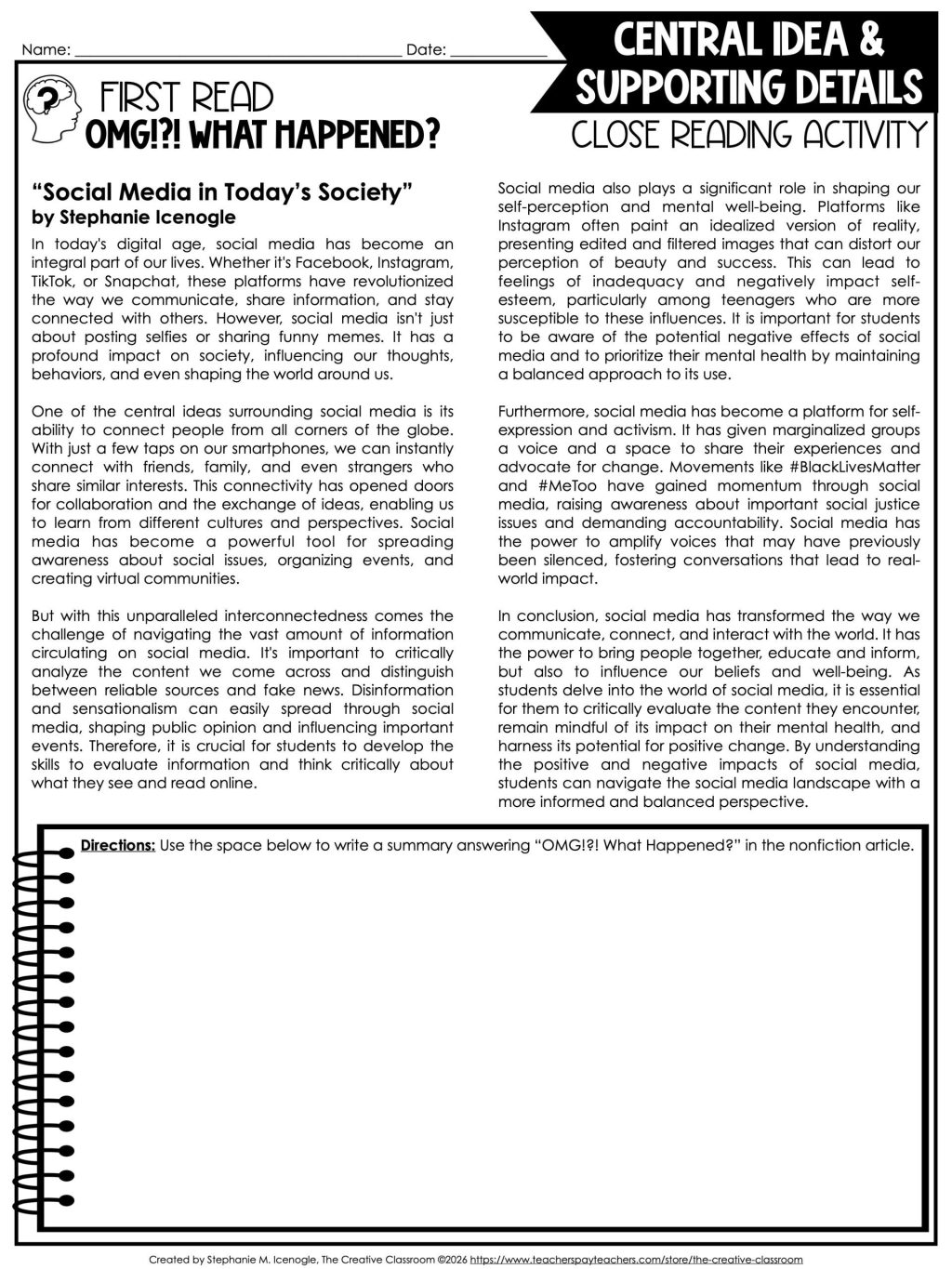
Teachers might ask questions such as:
What is the central idea of the article?
What is the author’s purpose?
What evidence supports the author’s claim?
These are important questions, but they require students to understand the text already.
If students are confused about what they just read, they will struggle to answer any analytical question.
The purpose of the first read is simple: to help students understand the text’s basic meaning before diving into deeper analysis.
The first read builds the foundation students need to:
- identify important ideas
- gather relevant textual evidence
- connect details across the text
- explain their thinking in writing
Without this initial comprehension step, close reading becomes much more difficult.
What the First Read Should Actually Achieve
The goal of the first read is not deep analysis.
Instead, students should focus on understanding the text’s overall message and identifying what the article is mostly about.
During this stage, students begin to:
- build familiarity with the topic
- notice unfamiliar vocabulary in context
- identify the general direction of the text
- recognize areas where they may be confused
The first read also provides valuable information for teachers. Student responses during this stage can reveal which students already understand the text and which students may need additional support during later reading tasks.
By focusing on comprehension first, teachers create a stronger foundation for the deeper work that happens during later reads.
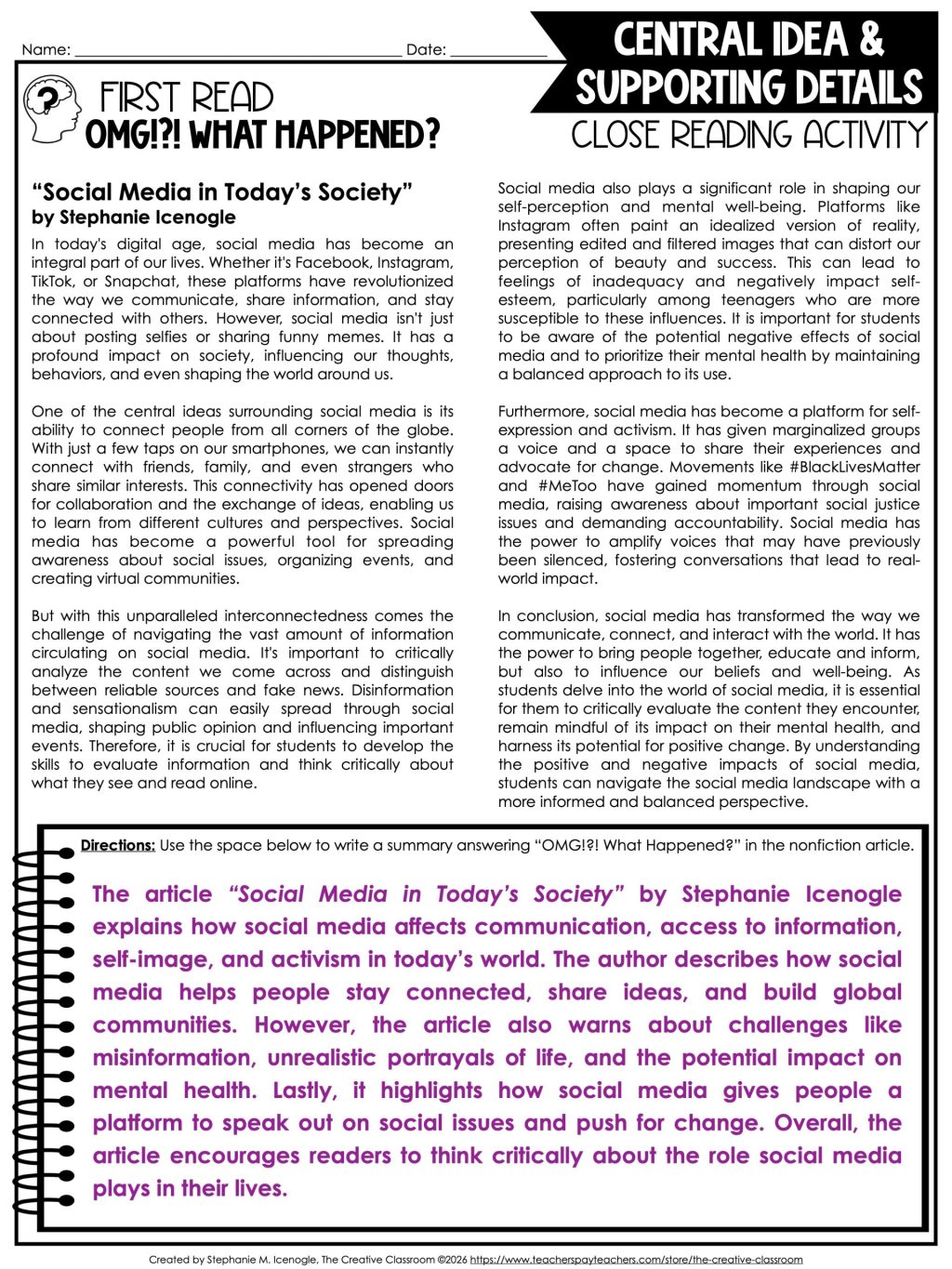
A Simple First Read Strategy: “OMG!?! What Happened?”
One strategy I use during the first read is a simple summary question:
OMG!?! What Happened?
After reading the article, students write a summary describing what the text was mostly about.
This quick writing task encourages students to focus on the text’s overall meaning rather than immediately seeking answers to specific questions. The goal is for students to capture the article’s main ideas in their own words.
This strategy works well because it helps students:
- process what they just read
- identify the main ideas of the passage
- practice summarizing informational texts
- clarify their understanding before moving forward
It also allows teachers to quickly see how well students understood the article during their first read.
What I Noticed When My Students Started Using This Strategy
When I first introduced this strategy in my classroom, I honestly expected mixed results. Some students picked it up quickly, while others needed time to adjust to the idea that their first task was to understand the article.
At the beginning, many students were still tempted to jump straight to analysis or start asking what the “right answer” was supposed to be.
But after consistently practicing the strategy, I noticed an important shift.
Students began slowing down while they read. Instead of scanning for answers, they were focusing on understanding what the article was actually saying.
Their summaries became clearer and more focused, and class discussions improved as more students understood the text before we moved into deeper analysis.
One of the biggest changes I noticed was in their confidence. When students felt like they understood the text, they were much more willing to participate in discussions, share their ideas, and support their thinking with evidence.
Over time, this simple first-read routine helped build stronger reading habits that carried over into every nonfiction skill we worked on.
How to Implement This First Read Strategy in Your Classroom
The first read can be implemented in just a few simple steps.
Step 1: Introduce the Purpose for Reading
Before students begin reading, explain the purpose of the first read. My typical purpose for reading statement is “During the first read, your only job is to read the text to get the gist of the article.” It’s simple, straightforward, and easy to communicate to middle schoolers. It gives students one clear job to focus on, preventing them from becoming overwhelmed.
Students should understand that their goal is to read the article from beginning to end and focus on understanding what the text is mostly about.
Step 2: Read the Article Without Stopping
Students will read the entire text from start to finish without stopping to answer questions.
You may choose to read the article aloud while students follow along, or students can take turns reading sections of the text. I typically will read this text aloud to students during the first read. This helps reduce reading time and gives students a clear, uninterrupted introduction to the article.
This step encourages students to experience the text as a whole rather than analyze it in small fragments.
Step 3: Ask Students to Answer “OMG!?! What Happened?”
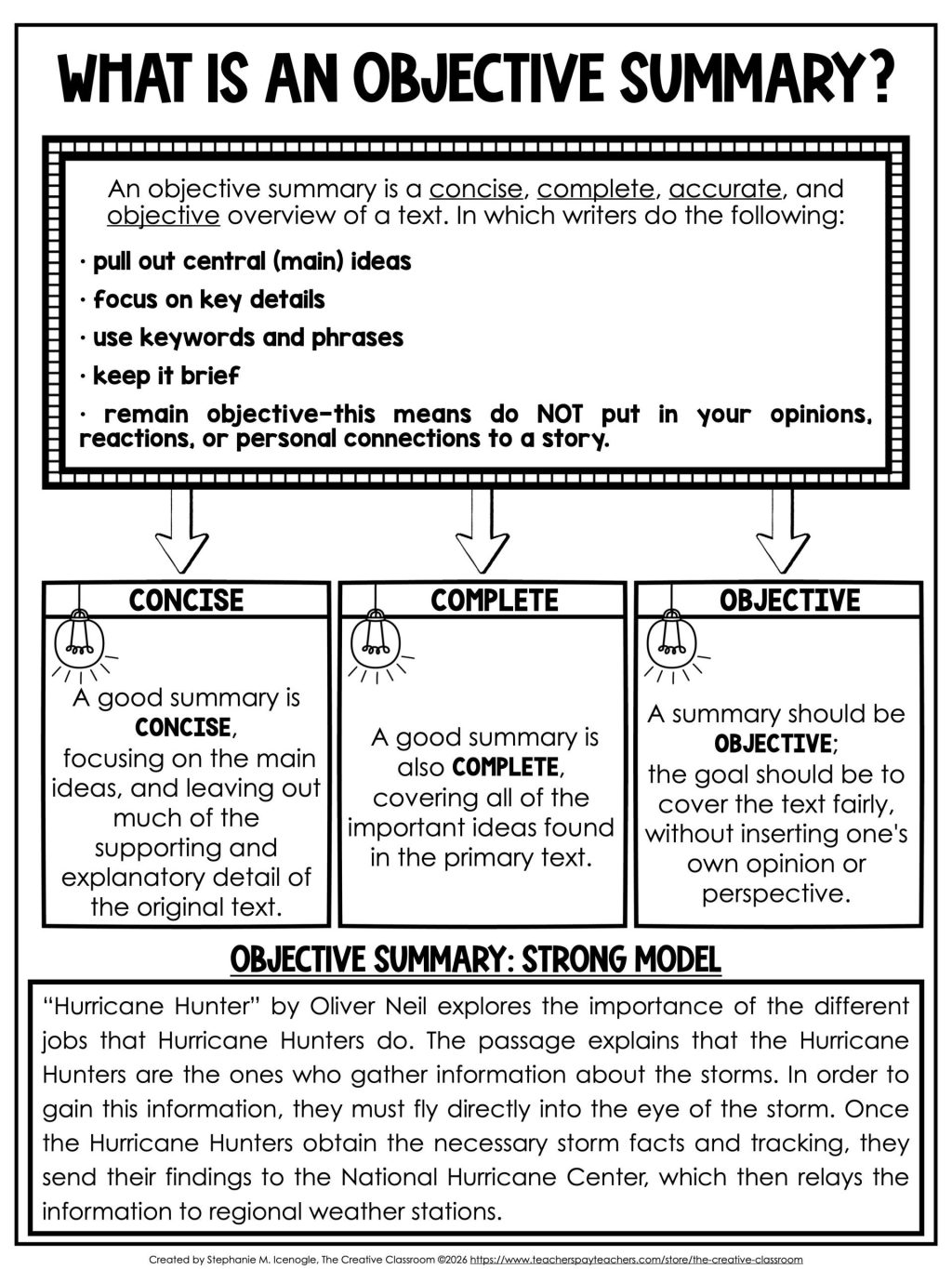
After reading, students write an objective summary explaining what happened in the article. I use this as an opportunity not only to check for student understanding but also to give my students a chance to practice the skills related to writing an objective summary.
You can find specific FREE objective summary organizer, writing samples, and anchor charts inside my Nonfiction Reading Strategies Guide.
This response does not need to be perfect. The goal is to capture the text’s overall meaning. I’ll talk later in this blog post about how I use these summaries as a formative assessment to create purposeful student grouping structures during the second read.
Step 4: Use Turn and Talk to Strengthen Comprehension
I like to use a variety of student collaboration strategies to allow students to discuss the article after they have completed their summary. You can use traditional Kagan structures like THINK-PAIR-SHARE, online tools like Nearpod or Formative App, or my favorite simple strategy, TURN and TALK.
This discussion allows students to compare their understanding of the text and clarify any confusion they may have had while reading. I like to walk around the classroom during the 5-minute discussion time to listen for questions and any misconceptions students may have.
Step 5: Share Responses as a Class
Finally, it’s time to come back together as a whole group. I like to invite a few students to share their summaries with the class. We discuss the gist of the article, and it allows students to ask questions. Sometimes we create an anchor chart with questions we have about the text. This becomes a powerful tool to revisit throughout the lessons.
This whole-class discussion reinforces the article’s main ideas and allows students to ask questions before moving on to deeper analysis.
How the First Read Supports Any Nonfiction Reading Skill
I focus on teaching the strategies for central idea and supporting details in my Nonfiction Reading Guide. However, the first read process can support instruction across any nonfiction reading skills. The first read focuses on comprehension. This approach, rather than analysis, helps students build the background knowledge they need before tackling more complex reading tasks.
Once students understand the basic meaning of a text, they are better prepared to analyze skills such as:
- author’s purpose
- point of view
- analyzing claims and evidence
- evaluating arguments
- making inferences
Using First Read Responses as a Formative Assessment Tool
One of the most valuable aspects of the first-read strategy is the information it provides teachers.
Student summaries quickly reveal how well students understood the article.
Teachers can use these responses to identify patterns such as:
- students who clearly understood the text
- students who captured only part of the main idea
- students who misunderstood the article entirely
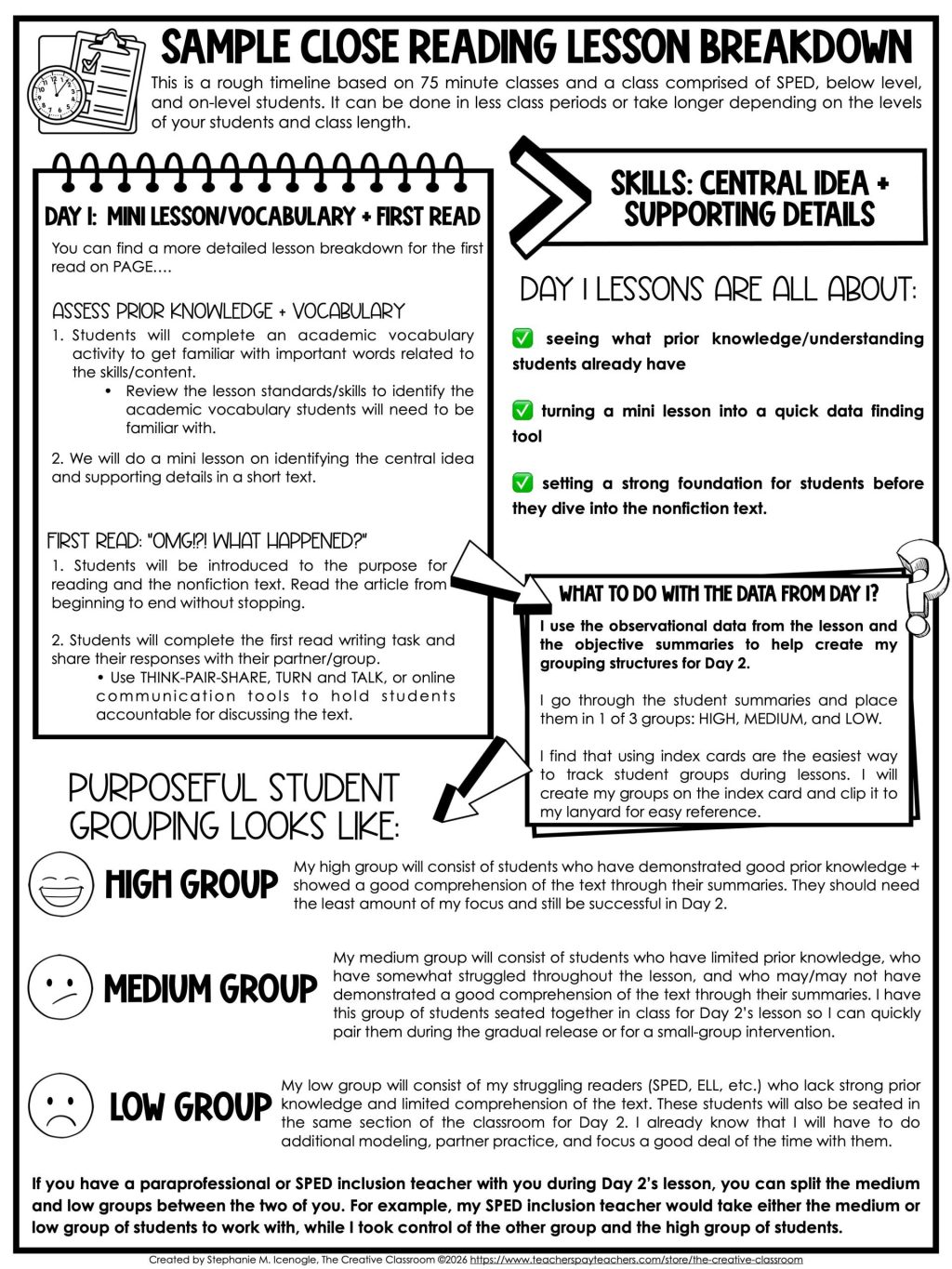
One of the most helpful parts of the first-read strategy is the insight it provides into my students’ understanding of the text. When students complete their “OMG!?! What Happened?” summaries, I quickly review their responses to see how well they understood the article. This helps me identify comprehension patterns and create purposeful groups for the next stage of the lesson.
For example, I often sort students into three general groups based on their summaries:
😀 High Group
- These students clearly captured the article’s main ideas.
- They are usually ready to move into the next reading task with minimal support.
- They can often work independently or with a partner.
🫤 Medium Group: Developing understanding
- These students understood parts of the article but may have missed some important details.
- I have this group of students seated together in class for Day 2’s lesson. This arrangement allows me to pair them quickly during the gradual release. It is also useful for a small-group intervention.
😞 Low Group: Needs additional support
- These students struggled to explain what the article was mostly about or showed significant confusion about the text.
- This group often benefits from additional modeling, guided practice, or small group support before moving on to deeper analysis.
Using the first read in this way enables me to adjust instruction quickly. It allows me to provide targeted support as students move into the next stage of close reading. The first read responses give me immediate insight into what students understand. This prevents guessing where students might struggle. I can see where they may need additional support.
Why This Strategy Builds Stronger Readers
When students consistently practice the first read strategy, they begin to develop stronger nonfiction reading habits.
Instead of rushing into analysis, students learn to:
- read the entire text before answering questions
- focus on the main ideas of the passage
- identify areas of confusion early
- build a foundation for deeper analysis
Over time, these habits improve students’ overall nonfiction reading comprehension and prepare them for more advanced analytical tasks.
Looking for a Step-by-Step Guide?
If you would like a complete breakdown of this close reading process, including lesson plans, organizers, and teacher models, you can download the nonfiction close reading guide here:
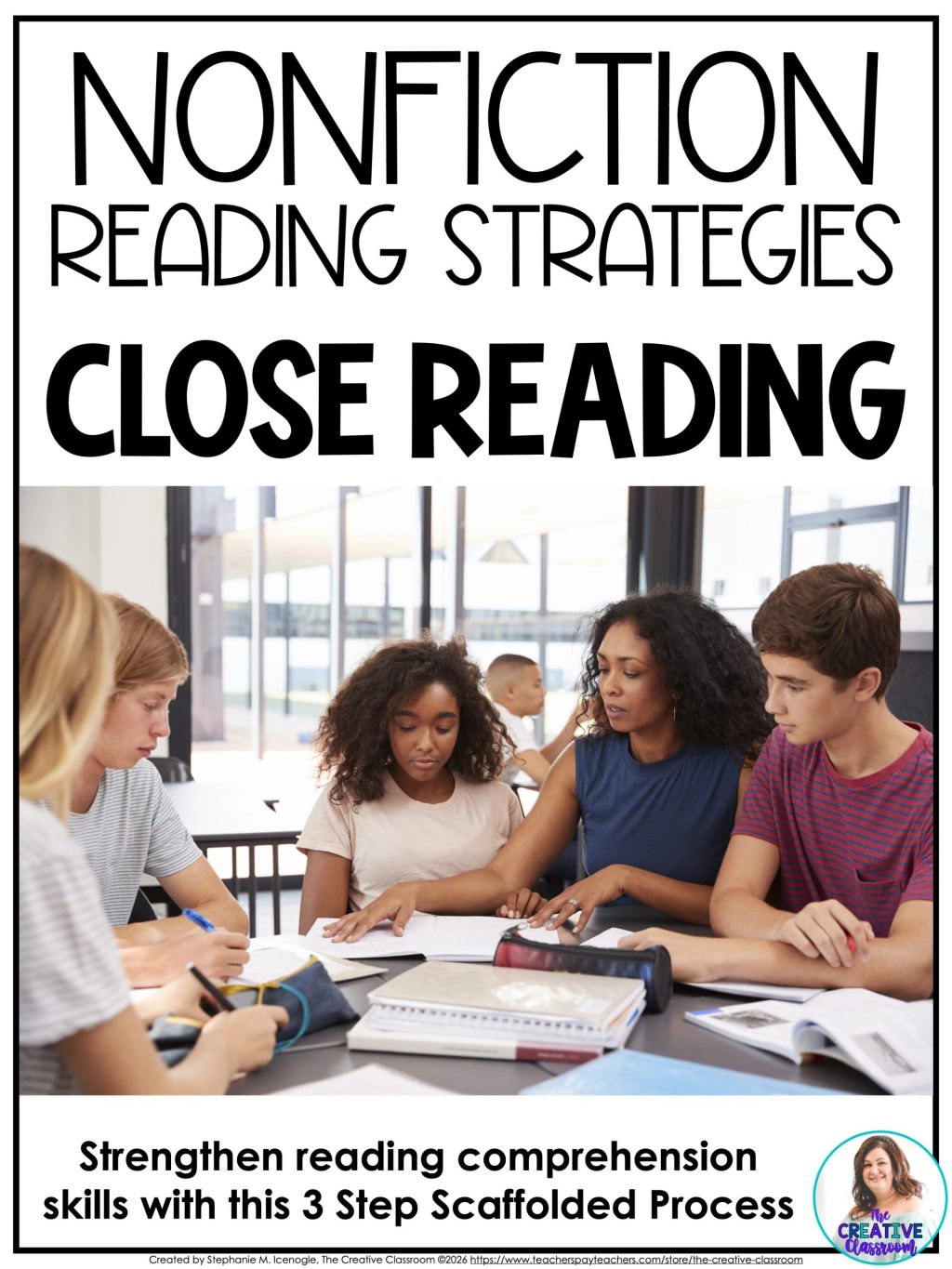
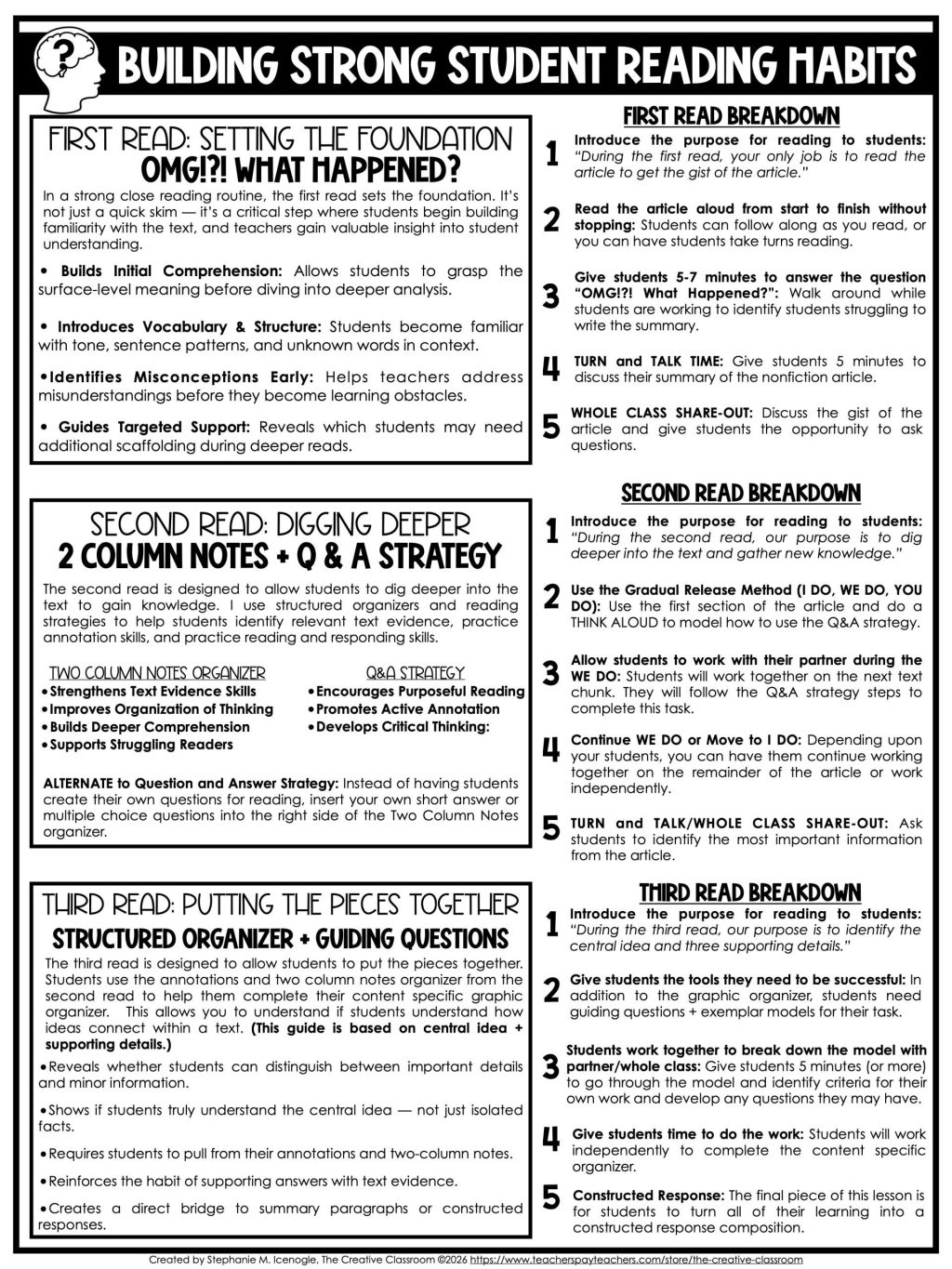
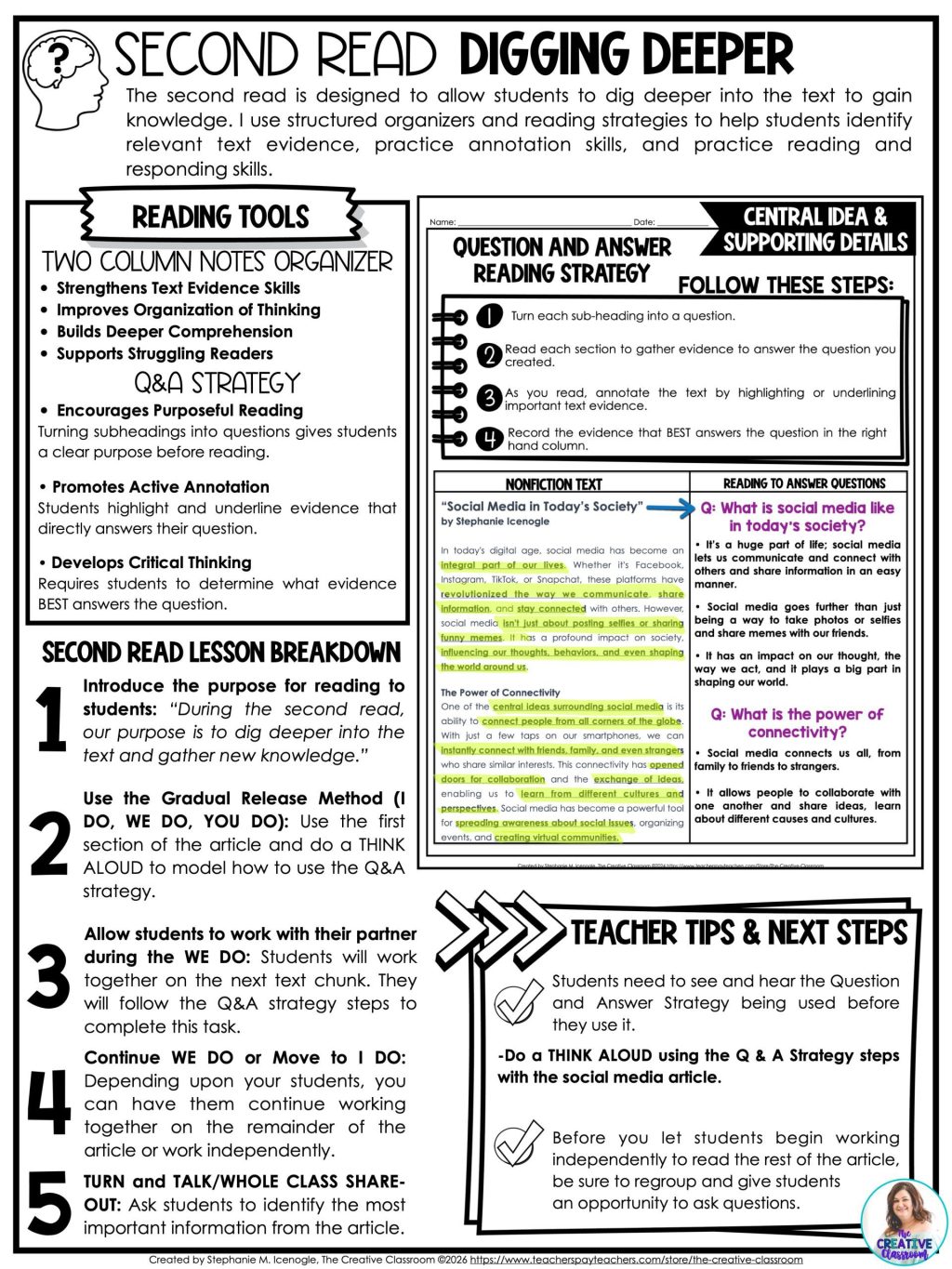
The guide walks through each stage of the close reading process and provides strategies specifically designed for middle and high school ELA classrooms.
Get a full overview of the Nonfiction Reading Guide in this introduction blog post, Why So Many Students Struggle With Nonfiction Reading Comprehension (And 3 Effective Steps ELA Teachers Can Use)
Next in the Series
In the next post, we will explore the second stage of close reading and how structured strategies, such as two-column notes and guiding questions, help students dig deeper into informational texts.
You’ll learn how these tools help students organize evidence, identify key ideas, and strengthen their nonfiction reading comprehension.
Find it in the shop
Nonfiction Reading Resources
Close reading lessons, central idea activities, and nonfiction passages for middle school.