
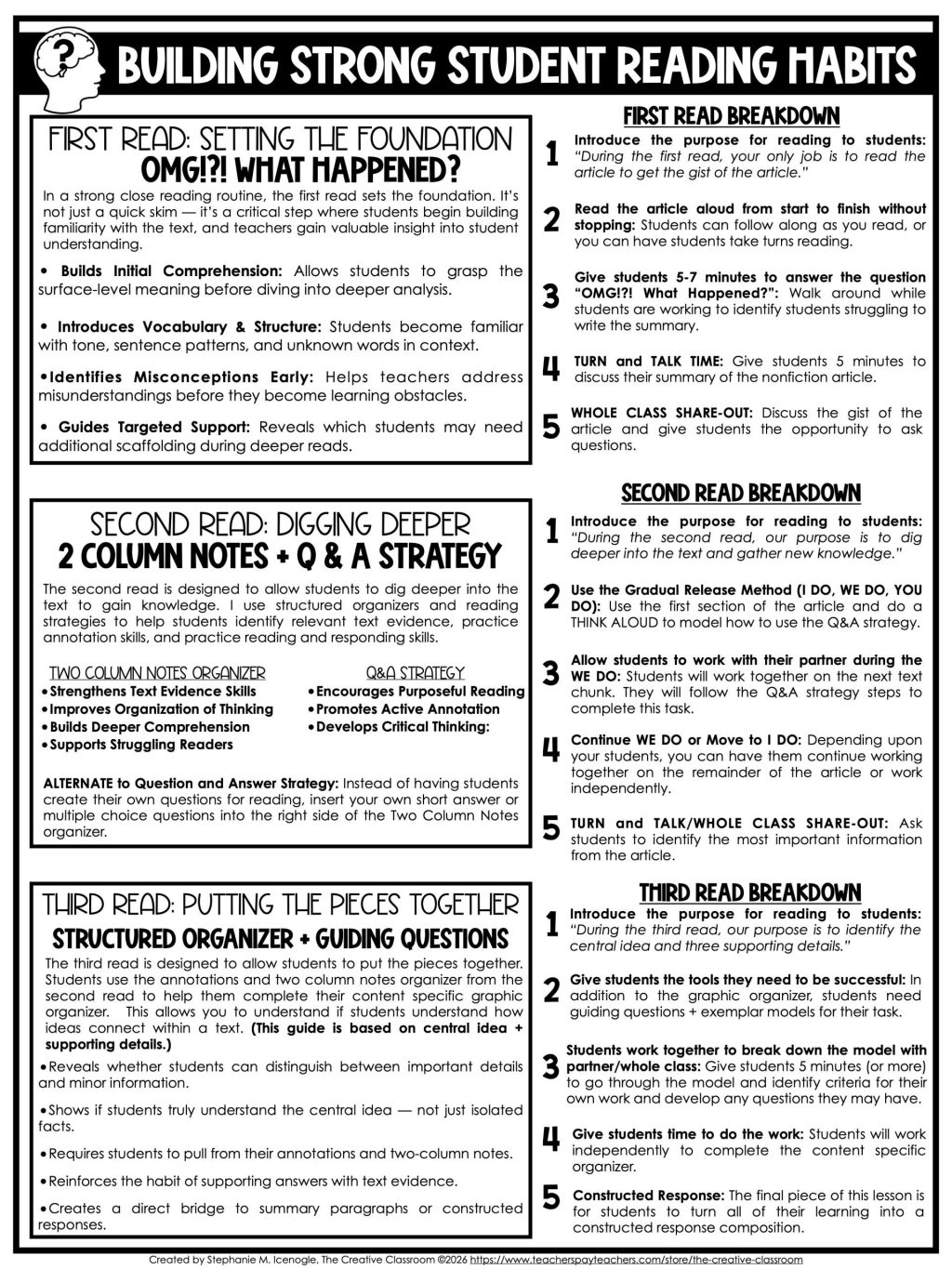
In the previous post in this nonfiction reading comprehension series, I shared how the first read helps students grasp the core idea of a nonfiction text. This step is essential for students to gain an understanding of the text before they begin analyzing it.
Once my students understood the basic meaning of an article, the next step was helping them dig deeper into the text.
Over time, I realized my students needed more structure during this stage of reading. Simply asking them to reread the text and identify important details wasn’t enough. Many students still struggled to determine which information actually mattered or how to engage with the text meaningfully.
So I intentionally designed my second read around two proven strategies that I knew would give students both the structure and the clear purpose they needed to dig deeper into informational texts.
Those strategies are:
- the Question and Answer reading strategy
- the two-column notes organizer
Together, these strategies help students move beyond basic comprehension. Students begin identifying key ideas, supporting details, and evidence within a nonfiction text.
The second read gives students the opportunity to slow down and engage with the text more purposefully.
In This Post
Why the Second Read Matters
When students read a text for the first time, their goal is simply to understand what the text is about.
During the second read, the goal shifts.
Students shift their focus from the text’s general meaning. They start to gather important information. They identify the ideas that matter most.
This stage helps students:
- locate relevant textual evidence
- recognize key ideas within the text
- organize information as they read
- begin thinking about how ideas connect within the article
Without this second read stage, many students move directly from basic comprehension to complex analysis. When that happens, they often miss important details and do not develop a deeper understanding of the text.
What the Second Read Should Achieve
During the second read, students should begin working more closely with the text. They need to become comfortable with understanding how each part of the text connects to the overall structure and purpose.
Rather than simply reading for understanding, students need to ask questions, gather information, and identify evidence that supports the ideas presented in the article.
The goal of the second read is to help students:
- identify important ideas in each section of the text
- locate supporting details and evidence
- organize information in a meaningful way
- interact with the text through questioning and annotation
Setting Students Up for Success in the Second Read
When I began refining my close reading routine, I realized that the second read needed two important components for students to be successful.
First, students needed a clear structure that helped them break down a complex nonfiction text into manageable sections.
Second, they needed a purposeful reading strategy that guided how they interacted with those sections of the text.
That is why the second read in my classroom is built around two strategies that work together:
- the two-column notes organizer
- the Question and Answer reading strategy
The two-column organizer provides the structure students need to work through the text, while the Question and Answer strategy gives students a clear purpose for reading.
What the Second Read Looks Like in My Classroom
Strategy 1: Using Two-Column Notes to Organize Information
The first step in setting up the second read is organizing the text into a format that students can work with more easily.
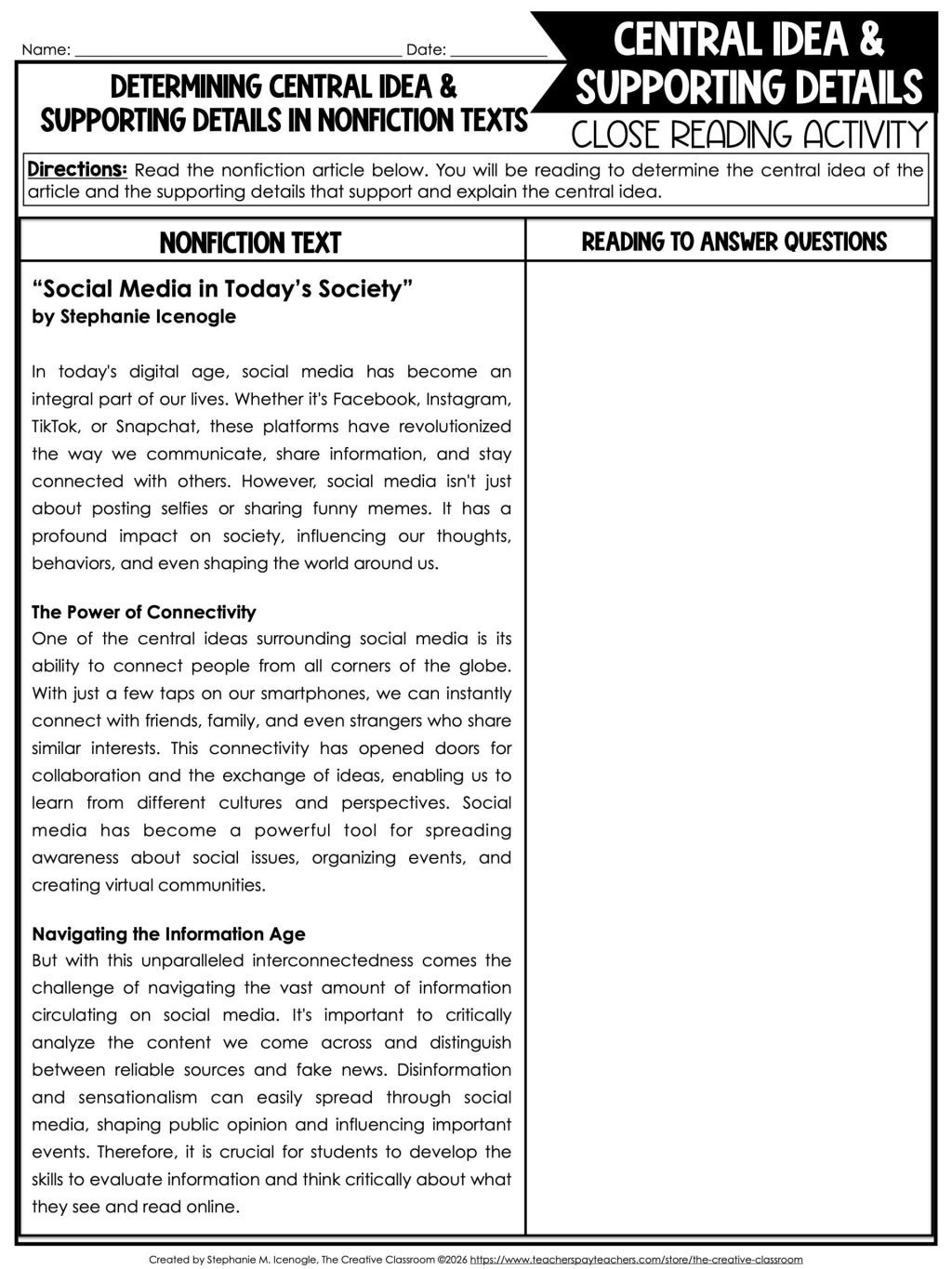
Before students begin reading, I place the text into a two-column notes organizer. This allows the article to be broken into smaller sections that students can focus on one at a time.
This reading structure works well for students of all reading levels, especially SPED and ESL learners. You can download editable two-column notes organizers here.
This step is important because nonfiction texts often contain dense information and multiple ideas within a single article. By chunking the text into smaller pieces, the organizer makes the reading process much more manageable and less overwhelming for students.
On the left side of the organizer, students read the selected section of the text. They can easily annotate important information as they read. They will highlight or underline details that appear to be important evidence or key ideas within that section.
On the right side of the organizer, students will respond to the questions that they have created using the Question and Answer strategy.
If you would prefer to skip the Question and Answer strategy, you can include specific reading questions that you want students to answer in the right side of the organizer.
This structure helps students:
- break complex informational texts into manageable sections
- identify relevant textual evidence while reading
- organize their thinking in a clear format
- focus on the information that actually answers the question
By setting up the text this way before students begin reading, teachers create a structure that helps students interact with the text more intentionally.
Strategy 2: The Question and Answer Reading Strategy
Once the text is organized within the two-column notes organizer, the next step is teaching students how to approach the reading itself.
When I first began using the two-column notes organizer in my classroom, I quickly realized that the organizer alone was not enough.
While the structure helped break the text into manageable sections, many of my students still struggled to annotate the text and identify the most relevant evidence.
Some students highlighted entire paragraphs, while others weren’t sure what they were supposed to be looking for as they read.
It became clear that students needed more than just a structure for organizing information. They also needed a clear purpose for reading each section of the text.
That is why I developed the Question and Answer reading strategy.
The purpose of this strategy is to teach students how to turn the subheading of each section of the text into a question.
This simple shift gives students a clear focus for reading and helps them identify the most relevant information within each section.

Modeling the Strategy for Students
During the second read, I use the gradual release method with my middle school students:
- I DO (Teacher model)
- We Do (Partner Practice)
- You Do (Independent Practice)
Before students begin the second read, I perform a THINK ALOUD. This models the thinking required. It also sets the expectations for students.
Typically, I will take the first section of the text. I will then show how students can use the subheading. This helps them create their guided reading question for that chunk of text.
First, I display the section’s subheading and show students how to turn it into a question.
For example, if the subheading reads:
“Social Media In Today’s Society”
I model how I would turn that heading into a guiding question such as:
What is social media like in today’s society?
Next, I read the section aloud and think through the process of identifying information that helps answer the question. As I read, I highlight or underline the details that can help me answer the guided reading question. This process models how to properly annotate relevant text evidence on the left side of the organizer.
Finally, I show students how to record that information in the right column of the two-column notes organizer. I show students how to summarize or paraphrase their text evidence. This helps them clearly see how the evidence connects to the question.
This modeling step helps students understand what to look for as they read.
Gradual Release Into Student Practice
After modeling the strategy, I ask students to identify the steps that I did during my model. This helps to clear up any misconceptions before students begin practicing the process themselves.
Often, I have students work with a partner for the next section of the text. This allows them to work through the steps of the Question and Answer strategy together. During the partner practice, I walk around to observe student progress and check for students who may not be ready to work independently.
As students become more comfortable with the strategy, they can complete the remaining sections of the text independently.
Over time, students begin to internalize this process and approach nonfiction texts with a clearer purpose and stronger reading habits.
Using the Second Read to Create Purposeful Student Groups
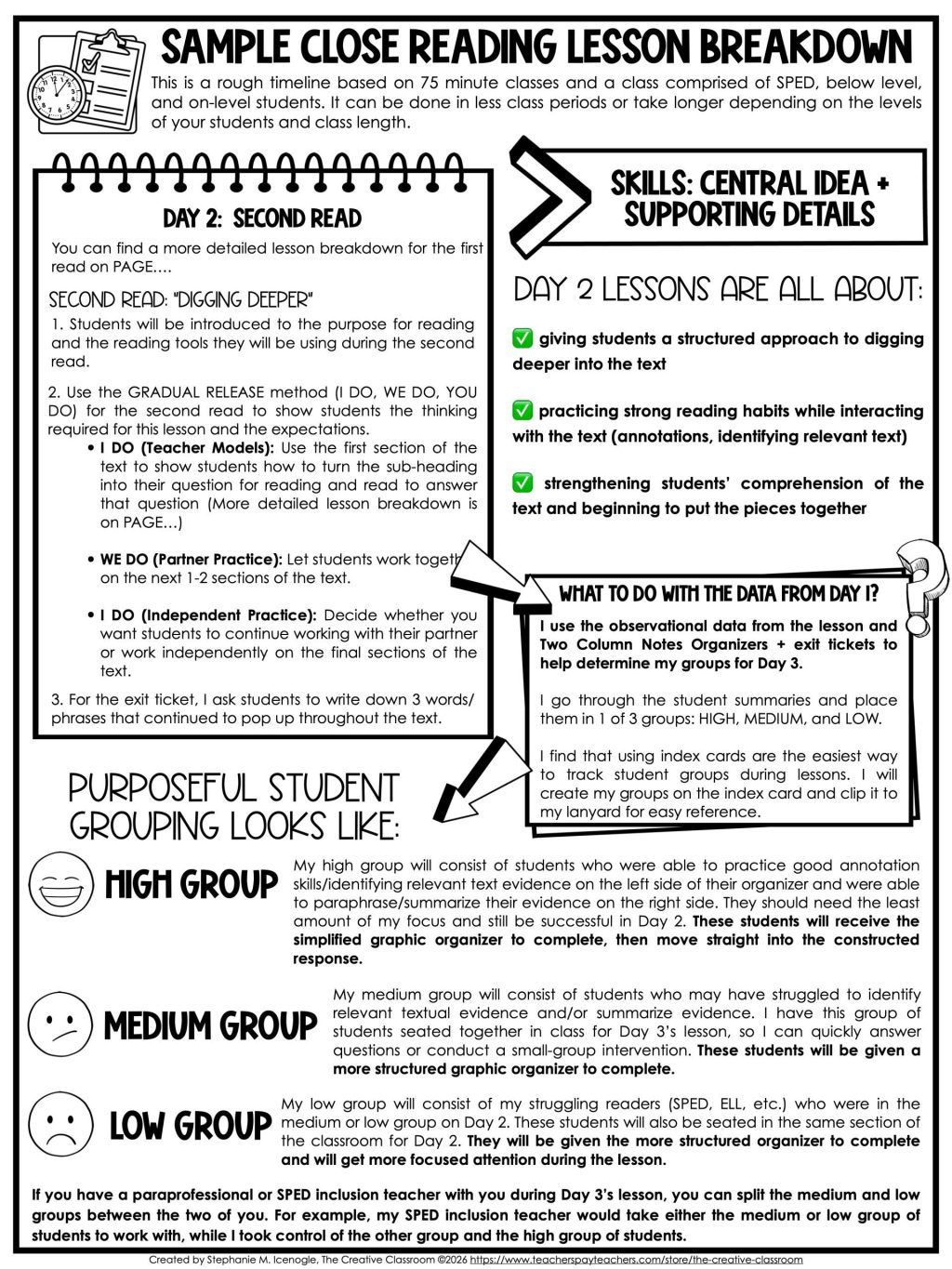
The second read stage offers another powerful benefit. It provides information about how well students are interacting with the text.
As students complete their two-column notes, I quickly review their work. I check how effectively they identify relevant text evidence. I also see how they connect it to the guiding questions. These responses give me immediate insight into how students are processing the text and where they may need additional support.
Using student work as formative assessment data enables teachers to intentionally group students based on their current level of understanding.
When reviewing student notes, I typically notice three patterns in student work.
😀 High Group: Strong Evidence Identification
Some students clearly identify the most relevant evidence in each section of the text. Their annotations focus on the key ideas, and their notes directly answer the guiding questions.
These students are often ready to continue working more independently during the lesson. They may move on to more in-depth analysis or collaborate with a partner to refine their thinking.
🫤 Medium Group: Partial Understanding
Other students capture some of the important information. However, they may miss key details. They might also record evidence that only partially answers the question.
These students often benefit from working with a partner or small group to revisit the section of the text. During this time, students can compare annotations, discuss their thinking, and refine the evidence they recorded in their notes.
😞 Low Group: Needs Additional Support
Some students struggle to identify which details in the text are most important. Their notes may include information that is unrelated to the guiding question. Alternatively, they may record very little evidence at all.
This group often benefits from additional modeling and guided instruction. I may reread the section with them. I model how to identify relevant evidence. Then, I walk through the process of connecting the text back to the guiding question.
Why the Second Read Strengthens Nonfiction Reading Comprehension
When students are given the appropriate structure and tools, they begin developing stronger reading habits. The combination of the two column notes organizer with the Question and Answer Strategy works perfectly. These strategies help students create strong reading habits.
Students learn to focus on the ideas that matter most. They avoid highlighting large portions of text or copying sentences without thinking.
They become more intentional readers who gather information, ask questions, and organize their thinking as they read.
These habits not only improve reading comprehension but also prepare students for the final stage of close reading.
Looking for a Step-by-Step Guide?
If you would like a complete breakdown of this close reading process, including lesson plans, organizers, and teacher models, you can download the nonfiction close reading guide here:
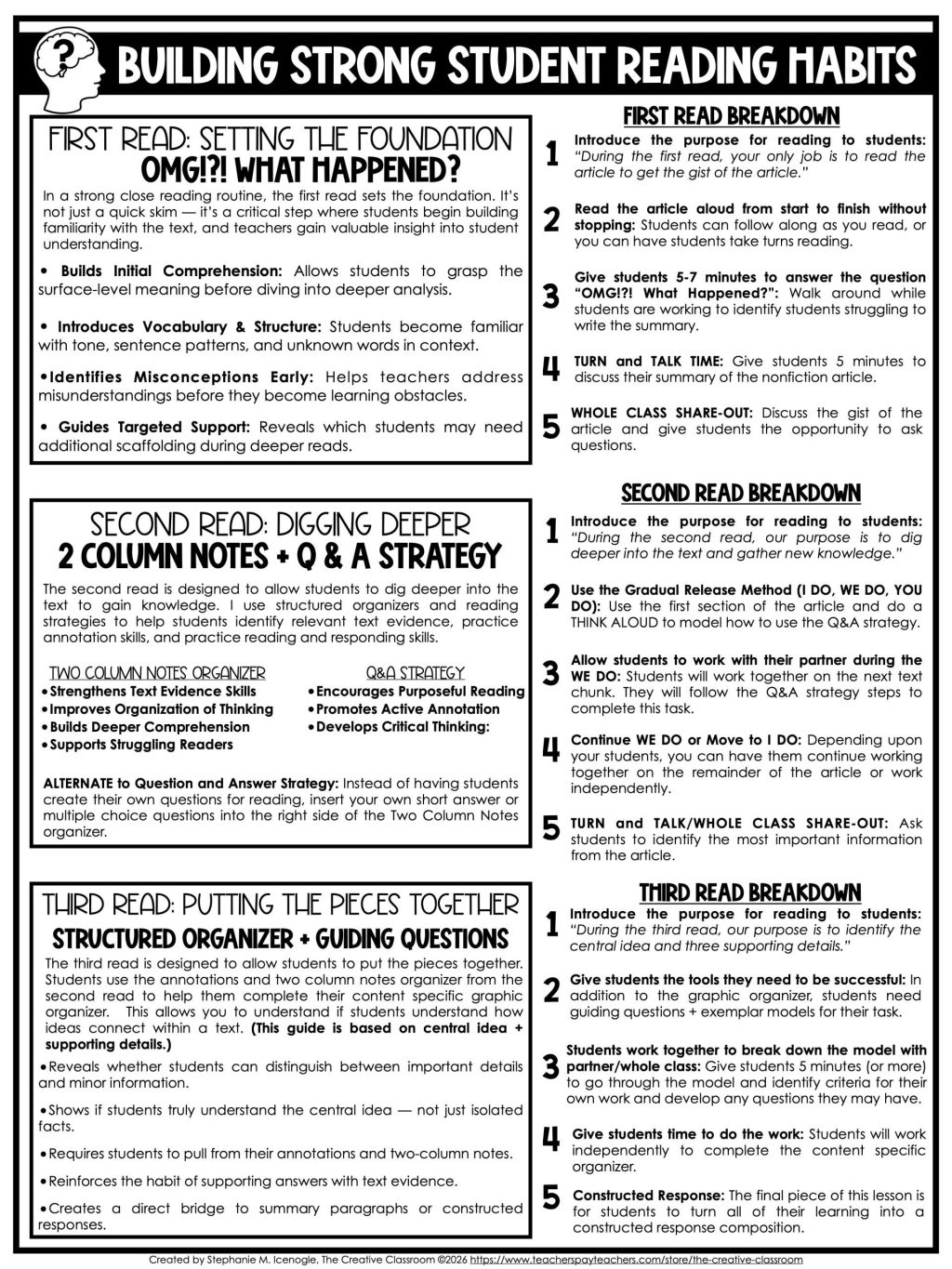
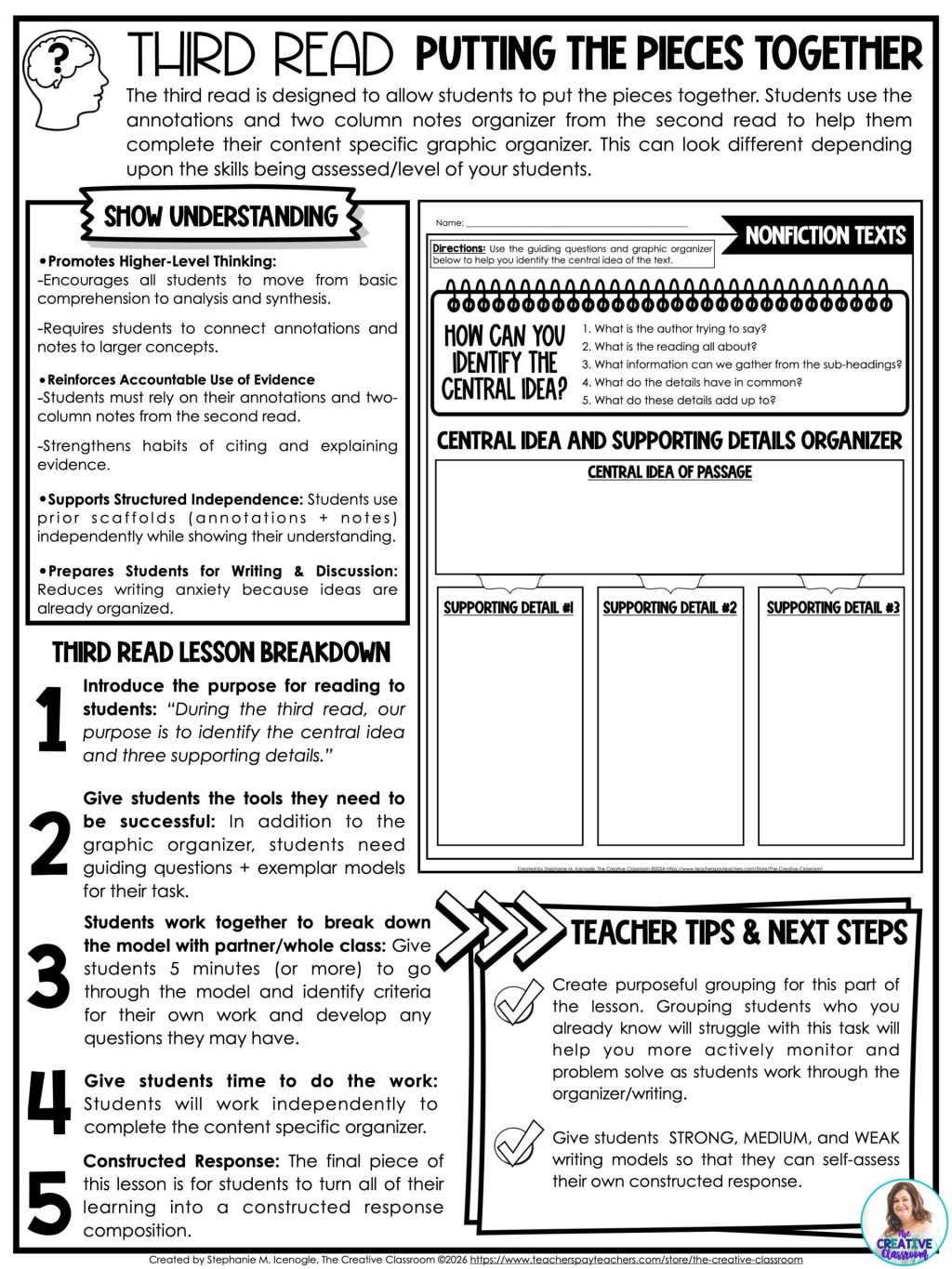
The guide walks through each stage of the close reading process and provides strategies specifically designed for middle and high school ELA classrooms.
Get a full overview of the Nonfiction Reading Guide in this introduction blog post, Why So Many Students Struggle With Nonfiction Reading Comprehension (And 3 Effective Steps ELA Teachers Can Use)
Next in the Series
In the final post in this series, we will explore how the third read helps students bring everything together.
Students will use content-specific organizers to connect their notes and annotations to the specific reading skill they are working on.
These organizers help bridge the gap between reading and writing, making it easier for students to explain their thinking and support their responses with evidence from the text.
Find it in the shop
Nonfiction Reading Resources
Close reading lessons, central idea activities, and nonfiction passages for middle school.